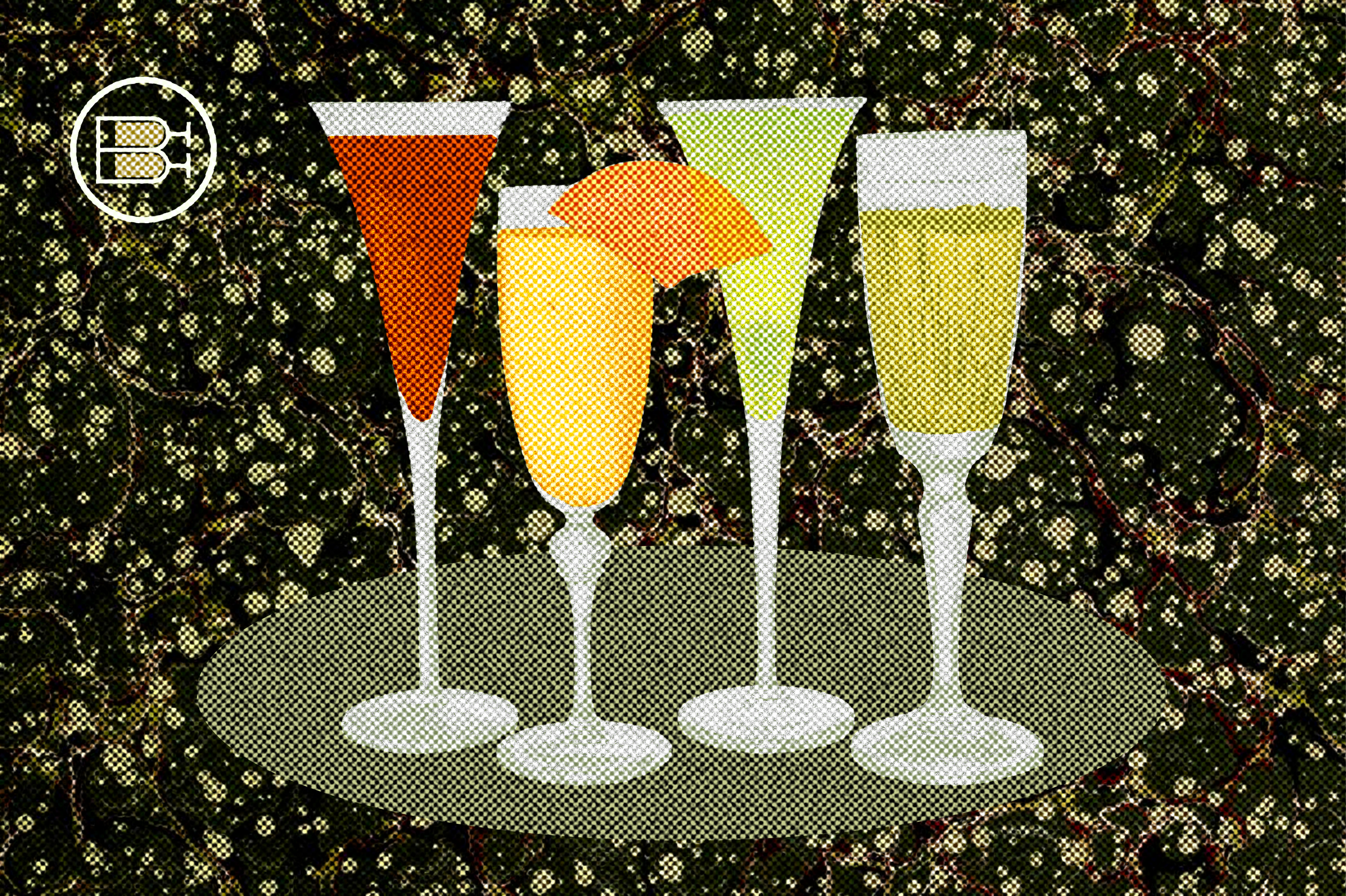
Here’s a confession that might get me banned from certain Parisian bars: most “Champagne cocktails” will be just fine with Cava instead of Champagne. The bubbly in your French 75 or Mimosa, or Kir Royale could just as easily come from Catalonia, and few would know the difference. Some might even prefer it, and your pocket will certainly be better off for it.
Cava, after all, is made the same way as Champagne. Same labour-intensive method, same secondary fermentation in the bottle, same tiny persistent bubbles. The difference is the grapes: Macabeo, Xarel·lo, and Parellada instead of Chardonnay and Pinot Noir. And the price, of course. A perfectly serviceable Cava runs you eight or ten euros (we’ve rounded up our favourites under twenty). A good Champagne? It’s hard to spend less than thirty.
This piece is about two things. First, the classic cocktails where you can swap Cava in and still call that spade a spade. And second, the cocktails that were born in Spain and built around the Iberian-fermented bubbles from the start.
The Classics, Reimagined
The French 75

The French 75 is supposedly named after a field gun from the First World War, which tells you something about its potency and the era whence it came: the Roaring Twenties, Belle Époque: gin, lemon juice, simple syrup, and sparkling wine. The traditional ratio is about one part gin to three parts bubbles, with half an ounce each of fresh lemon and simple syrup. Shake everything but the wine with ice, strain into a flute, and top with your sparkler.
Here’s the thing: Champagne’s yeasty, bready character can actually fight with the botanicals in the gin. Cava, with its brighter acidic profile and cleaner finish, often works better (similar to gin and tonic). The lemon in the cocktail finds a friend in Cava’s natural citrus notes. While I’m no professional bartender, I’ve been using Cava for home-made French 75s for years, and it’s never disappointed. Of course, I happen to be in Spain. If in France or abroad, I’d go with Crémant, which is less pricey than champagne but generally can be just as good.
The Mimosa

The mimosa might be the world’s simplest cocktail: sparkling wine and orange juice, traditionally in equal parts. It’s a brunch staple, which means it’s often made with whatever fizz is cheapest. But cheap doesn’t have to mean bad.
Diane Watkins, a sommelier writing for The Kitchn, argues that Cava is actually the best substitute for Champagne in mimosas. The reasoning is sound: Cava shares that slightly yeasty quality that makes Champagne interesting, but it’s drier and crisper than Prosecco. It won’t clash with the sweetness of the orange juice the way some fruitier sparklers can. The Catalan grapes bring notes of Granny Smith apples that complement the orange beautifully.
If you happen to be making juice with oranges from Valencia (more on that below), then all the more reason to blend something that has also grown in proximity. And again, there’s the question of price. When you’re making a pitcher of mimosas for Sunday brunch, in this economy, it’d be silly to be pouring Moët, unless of course you are Scrooge McDuck.
The Kir Royale

The original Kir was invented by Canon Félix Kir, a priest and mayor of Dijon during the French Resistance, who mixed crème de cassis with still white wine. The Royale came later, swapping the still wine for Champagne. A small measure of the blackcurrant liqueur, topped with bubbles, maybe fifteen to twenty millilitres to a full glass of wine.
The cassis is sweet and intense, almost jammy. It needs something crisp to cut through it. Cava’s acidity does this beautifully. A brut Cava with crème de cassis becomes something deeply drinkable: fruity but not cloying, with the bubbles lifting everything. Again, if you want to keep it very French, Crémant d’Alsace (which is closer to Dijon) will work nicely, and Félix Kir might be tipping his hat to you from the heavens.
Death in the Afternoon

Ernest Hemingway was many things, but subtle wasn’t one of them. In 1935, he contributed a recipe to a celebrity cocktail book. His instructions: “Pour one jigger of absinthe into a Champagne glass. Add iced Champagne until it attains the proper opalescent milkiness. Drink three to five of these slowly.“
The absinthe turns cloudy when it meets the cold wine, something called the “louche” effect. It’s a beautiful drink, pale green going to milky white. Some argue Prosecco’s fruitiness actually works better than Champagne here, softening the anise punch. Cava lands somewhere in the middle: drier than Prosecco, but still capable of holding its own against the absinthe’s bitter wormwood notes.
The Pornstar Martini

This one might raise eyebrows, but hear me out. The Pornstar Martini was created in London in 2002 by Douglas Ankrah at The Townhouse bar in Knightsbridge. It later became the signature drink at LAB in Soho, a bar Ankrah co-founded. The name was provocative on purpose; Ankrah said he imagined it as something “glamorous and indulgent”, partially inspired by a visit to a strip club in South Africa.
The drink itself combines vanilla vodka, passion fruit purée, passion fruit liqueur, lime juice, and a touch of vanilla syrup. But the essential element, and what makes it relevant here, is the shot of sparkling wine served alongside. Traditionally, it’s Prosecco, sipped between tastes of the sweet, tropical martini. The contrast is the whole point: lush passion fruit followed by dry, cleansing bubbles.
Since I moved to Barcelona, I’ve seen this cocktail more and more at bars like Almayer and Caja Negra. As you’d expect, they are serving it with Cava. I wouldn’t necessarily say it’s better, but the dryness cuts through the sweetness as nicely as with Prosecco. By 2018, the Pornstar Martini had become the most ordered cocktail in the UK, and then again in 2022. That’s a lot of Prosecco. Nothing against our Italian brothers, but the Cava producers need to step up and steal some of that market share.
Made in Spain
These next drinks weren’t adapted from French or English originals. They were created here, for the Iberian climate, using what we have.
Agua de Valencia

The story goes like this. It was 1959, and Constante Gil was running the Café Madrid in Valencia’s old town. A group of Basque regulars kept coming in and ordering “Agua de Bilbao,” a Basque expression for Cava. One evening, tired of the same routine, Gil tried to surprise them. He improvised, mixing Cava with fresh Valencia orange juice and splashes of vodka and gin. He called it Agua de Valencia.
For a decade, the drink didn’t really catch on outside Café Madrid. It wasn’t until the 1970s that it spread through Valencian nightlife and eventually the rest of Spain. Today, you can find it in bars from Cádiz to San Sebastián.
The recipe is meant for sharing. You make it in a pitcher: equal parts Cava and freshly squeezed orange juice, plus generous splashes of vodka and gin. No measurements, really; you adjust to taste. The key is using Valencia oranges if you can get them, and serving everything very cold. Traditionally, it’s drunk from a coupe, though flutes are common now. The point is the communal pitcher, the passing of glasses, the conversation that happens around it.
Cava Sangria

There’s no one definitive Spanish sangria recipe. The traditional ingredients include red wine, fresh fruit, and lots of ice, though brandy or orange liqueur is sometimes added. The beauty of sangria is that it adapts to what you have on hand.
Cava sangria is the sparkling cousin, and it’s particularly popular in Catalonia. Unlike still sangria, it doesn’t need hours of rest; the bubbles help the flavours integrate almost immediately. Start with a Brut Cava, add fresh orange and lemon juice, a splash of gin, and a smaller splash of dry orange liqueur. Toss in whatever seasonal fruit you like: peach, strawberries, apple, or melon. Give it a stir, chill it down, and serve over plenty of ice. The effervescence lifts everything; the fruit floats; the drink sparkles. It’s sangria but clighter, brighter, more festive. I’d argue that, since it foregoes the red wine, it’s less prone to make you sleepy.
The Barcelona Angle
I live in Barcelona, and here, Cava isn’t always viewed as a luxury item. The entry-level bottles are perfectly fine for a normal day; you can pick them up from a mini supermarket on the way to a party. People drink them in the streets during neighborhood parties. Sure, there are Reserva bottles that you save for a special day, but the range does seem wider compared to Champagne. So next time you’re making a French 75 or a mimosa or even serving a round of Death in the Afternoon to friends (if you do, I recommend this song as background music), consider Cava if a nice champagne feels like splurging. You’ll save money. Your cocktail won’t suffer; it might even improve, and you can focus on what really matters: enjoying that drink and the time it fuels with friends and family.
Salut!
Leave a Reply