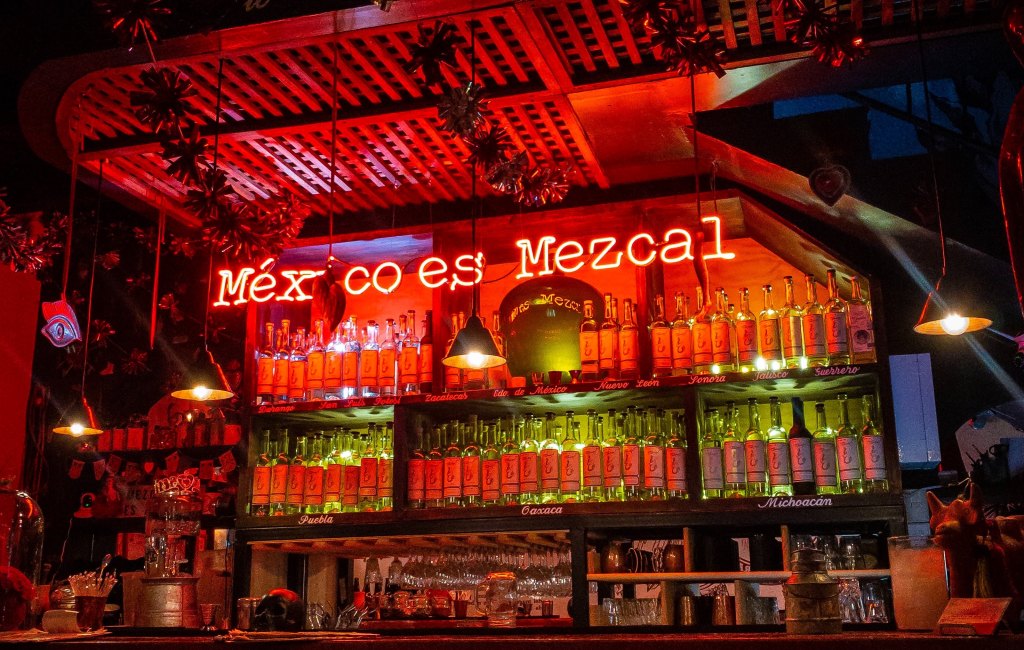
Is mezcal just another form of tequila? Or is tequila a form of mezcal? Which one is stronger? And why does one taste much smokier? Where is mezcal made? How long have people been making mezcal? And who the hell is Ron Cooper?
You see, as an avid mezcal drinker and a young Mexican, I’ve had all these questions myself. Rest assured, it’s nothing that the average Mexican knows. I had to take a dive into all this and figure out the answers for myself, so I’ve compiled them here to share with people like you, people I’d be happy to share a bottle of mezcal with because I applaud your thirst for knowledge about this delicious spirit.
So let’s start with the basic one:
What is mezcal?
Until 1995, the word “mezcal” could be used to refer to any type of maguey (agave) distillation made in Mexico. What changed in said year? That’s when the appellation of origin (Denominación de Origen in Spanish, DO) was established for Mezcal. In other words, this is where the Mexican authorities categorized only the traditionally-made spirits of nine states as marketable under the name “mezcal”, these are Oaxaca, Guerrero, Durango, San Luis Potosí, Zacatecas, Guanajuato, Michoacán, Tamaulipas, and Puebla.
That being said, as the Oxford’s Companion to Spirits and Cocktails points out, Oaxaca still produces about 90% of the regulated mezcal in Mexico. That is not to say you can still find people in Mexico making artisanal spirits out of some type of Agave and calling it mezcal— just don’t expect to see a seal of approval from the government on the bottle.
And yes, this also means that Tequila is, in theory, a type of Mezcal. The main difference being that Tequila is only made from a type of agave called Blue Weber. Mezcal, even that officially categorized as such by the DO, is made from a wide range of agave types. Most of them are Espadín, but you can also find Tobalá, Cenizo, Cupreata, etc.
Where does Mezcal come from?
So we’ve established that Mezcal comes from Mexico, but what we now call Mexico used to be a collection of territories and people, most of them subjugated to the Aztec Empire. This was the allegiance of three-city states that ruled the area the valley of Mexico and the surrounding areas from 1428, mainly centered on Tenochtitlán (modern-day Mexico City).
Like with any empire, the governing body of this region collected taxes from the much smaller cities and territories surrounding the area. At some points of the empire, its rule did extend all the way to the Pacific coast, which are the modern states of Guerrero and Oaxaca; where, you guessed it, most of Mezcal is made, but also Jalisco (a bit further up north), the land of Tequila.
Somewhere around that area, it is likely that the indigenous populations of what is now Mexico were already making some sort of agave distillation; even before the Spanish came. As of this writing, this is still a matter of dispute. While it’s not completely certain that the indigenous people were making some sort of Agave distillation, what is certain, is that they consumed a beverage called “pulque” as far back as 2,000 years.
One theory is that when the Spanish arrived, they brought with them some form of hard liquor, which they were used to drinking (the Arabs had introduced alcoholic distillation to the Iberian peninsula centuries earlier). Once the Spanish immigrants in New Spain ran out of hard liquor brought from The Old Country, they had to find something local to distill and drink. And what do we know for sure were the locals drinking? Pulque. So, “let’s try and distill something from that maguey plant”, they probably said.
This helps explain where the name “mezcal” comes from; which is the Nahuatl “Mexcalli”; itself a composite of the words “metl”, agave, and “ixcalli”, which means “oven-cooked”. Pulque, however, doesn’t have anything to do with the process of making mezcal, as it’s sometimes believed, and as we will see below.
How is Mezcal made?
Maguey is a succulent native to most of Mexico, but also some parts of Central America. This is what that looks like.

Master Mescaleros, or their assistants, cut off those pointy leaves, being careful not to stab themselves with them in the process. As many kids in Mexico will tell you, it’s no fun. Once they’ve removed them, they reach the core of the plant, which is what those in the business call the “piña”, which is the same word we use in Spanish for “pineapple”.

They then take this piece of the plant and roast it in an underground firepit. This is yet another difference between Tequila and Mezcal. Whereas with the former, the pineapple is cooked in an oven, mezcal gets some of its smokier notes from the earth it’s cooked within— the same soil it grew on!
Once the roasting process is over, all these cooked pineapples are shredded and then drained for their juices. To imagine what these savory and smoky agave pineapple juices smelled like the day they were fully cooked, you can turn to your Mezcal bottle. You just take a few drops of the crystalline liquid, put them on the palm of one hand, rub your hands together, and then give them a whiff right as you cup your hands. Since the alcohol evaporates, you can smell the cooked Agave again, or so I was told by a maestro mezcalero at an art fair in Mexico City around 2015.
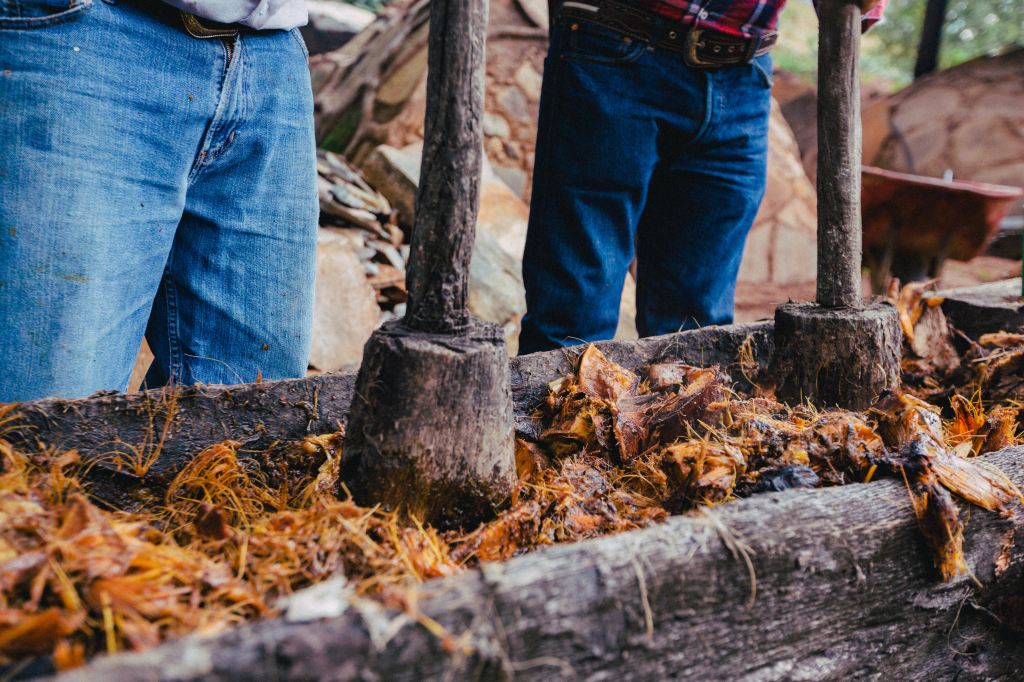
Anyway, so these juices from the cooked Agave hearts are then mixed with a bit of locally-sourced water and left to ferment for a few weeks or as long as a month, which gives way to the first alcohol in the mix. This usually happens in open tanks made of oak, pine, or clay. Some houses use animal hides for this, or even cow bellies, which is a practice that dates back to the seventeenth century. This fermented mix, regardless of the container, is called “tepache”.
This “tepache”, which is technically an agave beer, is what is then distilled. Depending on the maestro mezcalero, it can be distilled in copper or clay stills; twice over. The first distillation will produce a liquid that we call “ordinario”— Spanish for “ordinary”—. This is then distilled a second time to produce mezcal.
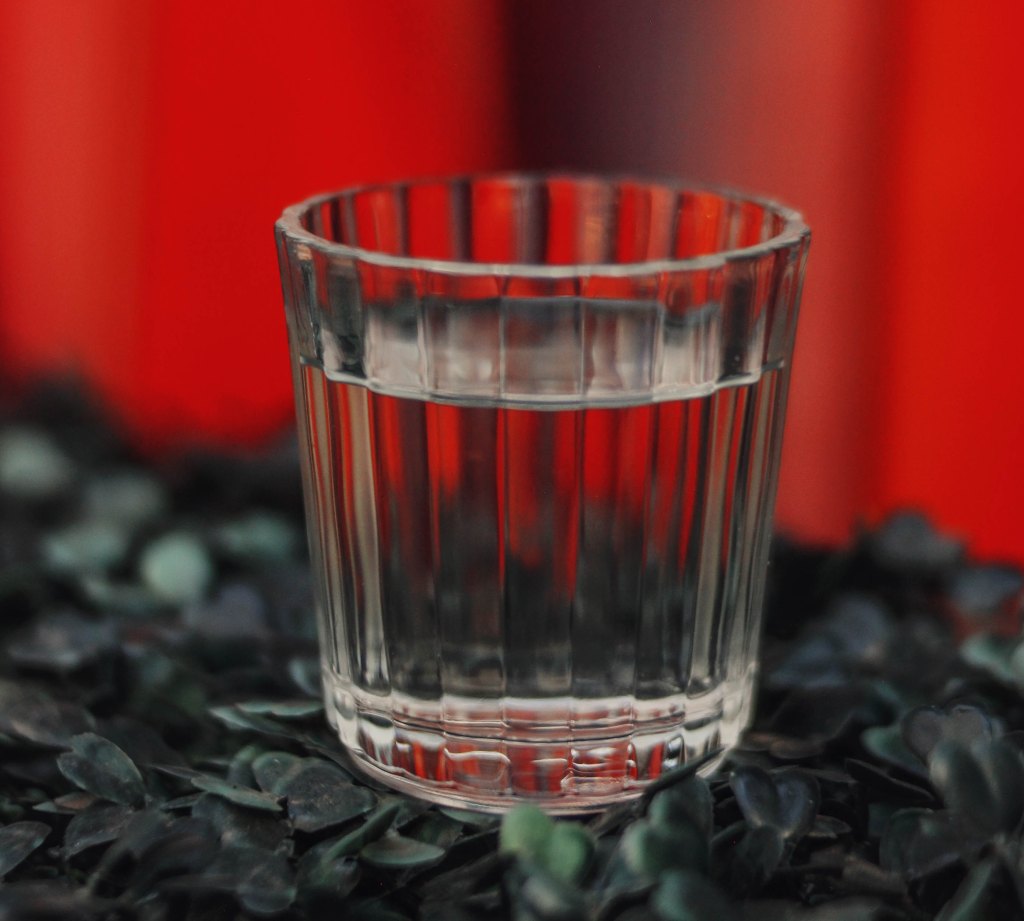
Once it’s called mezcal, it can be consumed immediately or it can be aged in barrels or containers. Like with any spirit, the aging time and method will enhance certain flavors and qualities of the drink. Younger varieties are aged only a few months, while others can be in the barrels for years.
The Mezcal Rush, or why is Mezcal so popular?
When I was a kid growing up in central Mexico in the nineties, none of the adults I knew drank mezcal. For the most part, they drank tequila if they drank anything related to the agave plant. Some of them would maybe bring back a bottle of mezcal as a souvenir from a trip to Oaxaca, the same way they would bring back craft-made pots or decorative art. While artisanal mezcal existed for perhaps thousands of years, it wasn’t nearly as popular and hyped as it is today.
I remember the moment that completely changed, at least from my perspective. I was now in university and all of a sudden mezcal was all the rage. Few restaurants carried it consistently, but at the underground techno parties I would go to, there would be mezcal, either in bottles or in a huge plastic container, that somebody sourced because they were trying to start a Mezcal company, or knew somebody starting a company.
Some of these incipient brands, like Gracias a Dios eventually opened up their own places. Today it’s extremely common to find Mezcal in any restaurant in Mexico and even abroad.
It was until doing research for this piece that I came across who I deem partially responsible for this rush. That’s Ron Cooper, the American artist behind Del Maguey Mezcal, which is still one of the most revered brands today, and oddly enough, not widely available in Mexico.
Ron Cooper was a painter and somewhat of a bohemian whose travels led him to Oaxaca in the 90s. There, he fell in love with mezcal and the people that made it, and considered it to be “liquid art”. As he started to import Del Maguey into the United States, the drink developed somewhat of a cult status among certain bartenders.
Nowadays it’s increasingly common to find this among bars all over the world. I wrote a bit about finding a Mezcal Negroni in Athens, and the time spent writing this was frequently accompanied by sips of an Alipus I bought in Barcelona.
I can’t imagine Mezcal losing this status now, and that’s probably a great thing. While the popularization has raised some questions about the sustainable practices in states as problematic and ridden with poverty as Oaxaca and Guerrero, I know many of these companies are trying to up the ante while bringing economic benefits to the region without losing sight of the artisanal aspect of what is probably one of the world’s oldest spirits.
There are exceptions of course, but I’m pretty sure mezcal-making will continue in some form or another. There’s a saying in Mexico you’ve probably heard, “para todo mal mezcal, para todo bien también”. This means it’s a drink for good times as much as shit times.
Mezcal is certainly undergoing a good time right now, and I raise my glass to the hope that it shall continue to do so for a great while, to the benefit of all those involved, and all of us partaking.
¡Salud!

 lesbegudes.com
Leave a comment