There’s something about the word herbal that makes you feel like you’re doing your body a favour—even when it’s in a shot glass. In Spain, ask for a “licor de hierbas” and you’ll get something fragrant, usually green or golden, that doesn’t smell like just one particular herb, but perhaps all of them, and at the first sip feels warm and slightly raspy, like it’s cleansing everything from your esophagus to your stomach and is just what the Doctor would’ve ordered after the meal you just had.
But what is it, really? And is it just a folk remedy dressed up in booze, or something more?
Let’s pour one out and take a closer look.
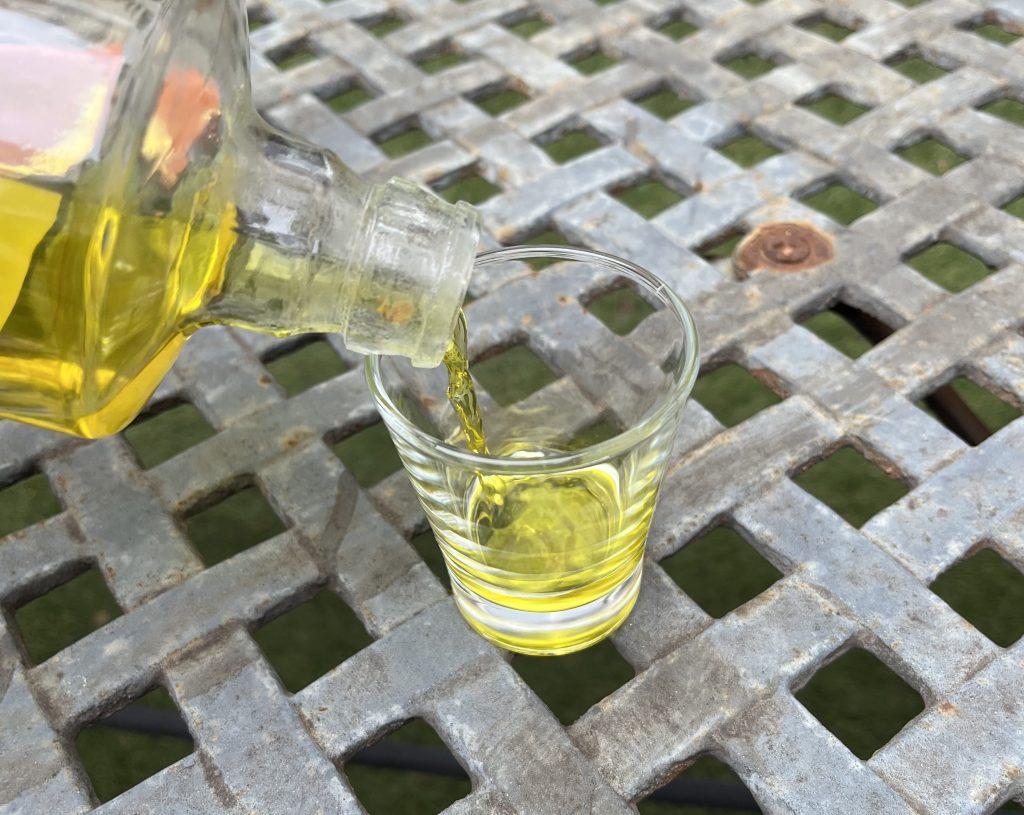
A Whole Family of “Herbal Liqueur”
The phrase licor de hierbas casts a wide net. Technically, everything from the anise-heavy Ouzo of Greece to Italy’s Fernet could fall under the herbal umbrella, passing through Germany’s Kräuterlikör somewhere in the middle. Of course, Spain alone offers a diverse spectrum. There’s Ratafía in Catalonia, soaked with diverse fruits, walnuts, and herbs. There’s also Hierbas Ibicencas, born in the Balearics, anise-flavored and sweet with heavy rosemary and thyme notes.
But when you hear licor de hierbas in most Spanish bars, they’re usually referring to Orujo de Hierbas—a Galician specialty (though, to be fair, also widely produced in Asturias and Cantabria).
Galicia’s Green Gold
Orujo de Hierbas starts with orujo, a potent spirit distilled from the skins, stems, and seeds left over after wine production. It’s Spain’s answer to grappa, and it packs a punch. But steep it with a local blend of herbs—things like fennel, lemon verbena, mint, chamomile, and sometimes anise—and it transforms. Sweetened and mellowed, it becomes something sippable, complex, and unmistakably herbal.
Galicians have been drinking it for centuries, often after meals to help “settle the stomach.” Whether that’s old wives’ wisdom or biochemistry at work is still up for debate, but one thing’s for sure: it makes an excellent digestif.
Some well-known bottlings include D’Froiz Hierbas and Mari Mayans from Ibiza—each with their own twist on the botanical lineup.

What Herbs Are Used in Licor de Hierbas?
There’s no universal recipe, but some common herbs include:
- Mint – cooling and fragrant
- Fennel – licorice-adjacent, aids digestion
- Chamomile – floral, calming
- Lemon verbena – citrusy, uplifting
- Anise – polarizing, but classic
These are steeped in a base spirit (usually orujo or something neutral), sweetened, and sometimes colored before bottling.
So… Is This Like Chartreuse?
If you’re a drinker in the U.S. or U.K., chances are Chartreuse is your reference point for what an “herbal liqueur” looks like. Produced by Carthusian monks in France with a recipe so secret only two people know it, Chartreuse has been marketed—successfully—as something between a sacred relic and a luxury item. Scarcity, origin, and mystery have made it a cult classic.
And yes— Chartreuse is technically a licor de hierbas. But in practice, it’s in a different price bracket and flavor register. The green version is sharply herbal, high in alcohol, and boldly bitter. The yellow version is a bit sweeter and mellower, closer to what you might find in a well-made Spanish orujo de hierbas.
Now, let’s be clear: most Galician herbal liqueurs aren’t trying to imitate Chartreuse. But if you’re a casual drinker intrigued by that category—something botanical, a little sweet, and worth sipping slowly—licor de hierbas can offer a surprisingly enjoyable alternative. Especially for those who prefer the softer profile of Yellow Chartreuse but not the $60+ price tag.
A Sip of History—and Medicine?
Chartreuse, like many traditional European liqueurs, originated as a medicinal elixir. In the 1700s, it was part of the monastic tradition of preparing concotions believed to heal or fortify the body. Herbal liqueurs from Spain share similar origins: digestifs designed to help with everything from indigestion to melancholy. Whether or not they work is another question—but the ritual of sipping them after a meal persists, and that alone has its own kind of wellness baked in.
Is It Good for You?
Let’s not get ahead of ourselves. Orujo de Hierbas may be steeped in herbs, but it’s still alcohol—and whatever health benefits its ingredients might offer don’t magically survive fermentation, distillation, and sweetening. They also don’t offset the health hazards of drinking it in excess.
That said, there’s a reason herbal liqueurs have long been linked to digestion. Many traditional herbs—fennel, mint, chamomile—have proven benefits in tea or extract form. Whether those properties carry over into a post-dinner chupito is debatable and mysterious, but the ritual itself can certainly be soothing.
So, is it healthy? Not really, not clinically. But as a small, moderate, intentional punctuation mark to a heavy meal, it plays its role beautifully. Sometimes the benefit is in the pause, not the potion.
Where to Find It (and How to Make Your Own)
Orujo de Hierbas isn’t hard to find if you know where to look. Websites like Productos de Asturias sell well-reviewed bottles online. If you’re feeling adventurous, you can even try making your own—a satisfying way to turn vodka or grappa into something deeply personal.
The basic method? Combine a neutral spirit with herbs and citrus peels, let it infuse for a few weeks, then sweeten to taste. No two bottles will ever be the same, which might be the point.
Drink It Like a Local
There’s no ritual quite like el chupito. In Galicia, a tiny glass of licor de hierbas is almost a cultural punctuation mark—served after a big meal, sometimes gratis, and rarely refused. You sip it, slowly. You talk. You loosen your belt one notch.
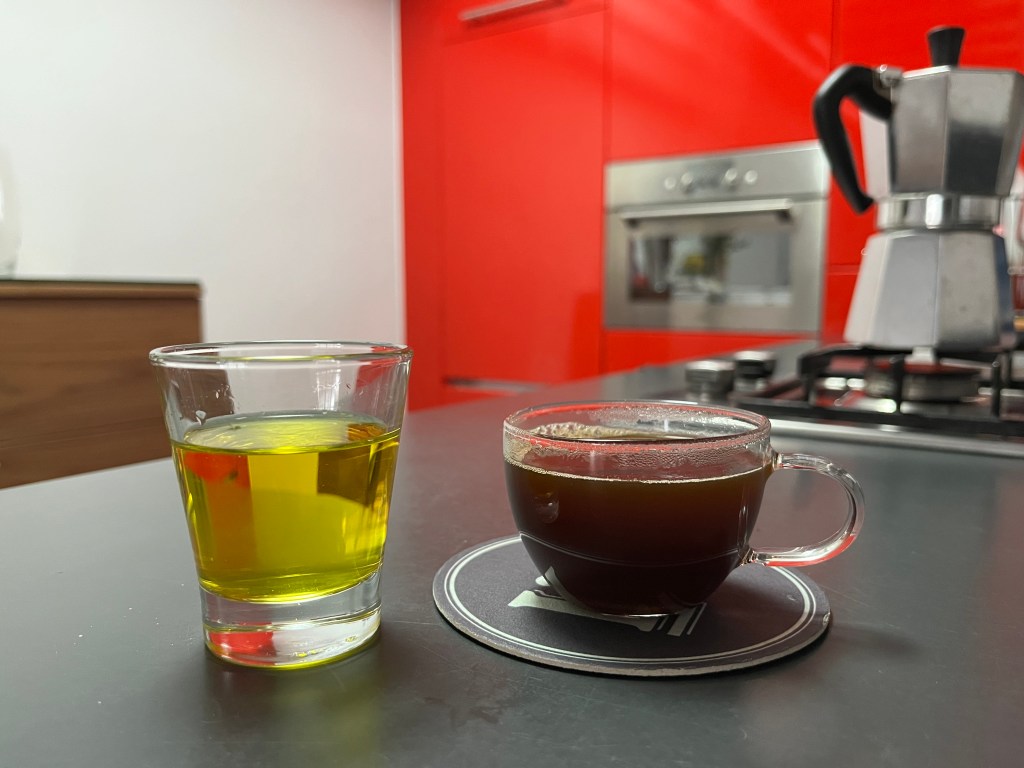
Cold or on a highball glass with ice cubes is also traditional, especially for the bright yellow versions, and especially if it’s the middle of summer. Some folks drink it room temp to better appreciate the botanicals, but that may not be so appealing if it’s over 30° out.
Final Sip
Spanish herbal liqueurs are a category worth getting to know, and Orujo de Hierbas is their green, glowing heart. It’s not a miracle tonic, but it’s a taste of the land, the language, and the long-standing belief that herbs can both heal and elevate pleasure.
And at the very least, it gives you a reason to linger at the table chatting away with your loved ones for just a little longer. Isn’t that what we’re in this planet for?
¡Salud!

 lesbegudes.com
Leave a comment