
A remarkably good white Rioja with French undertones
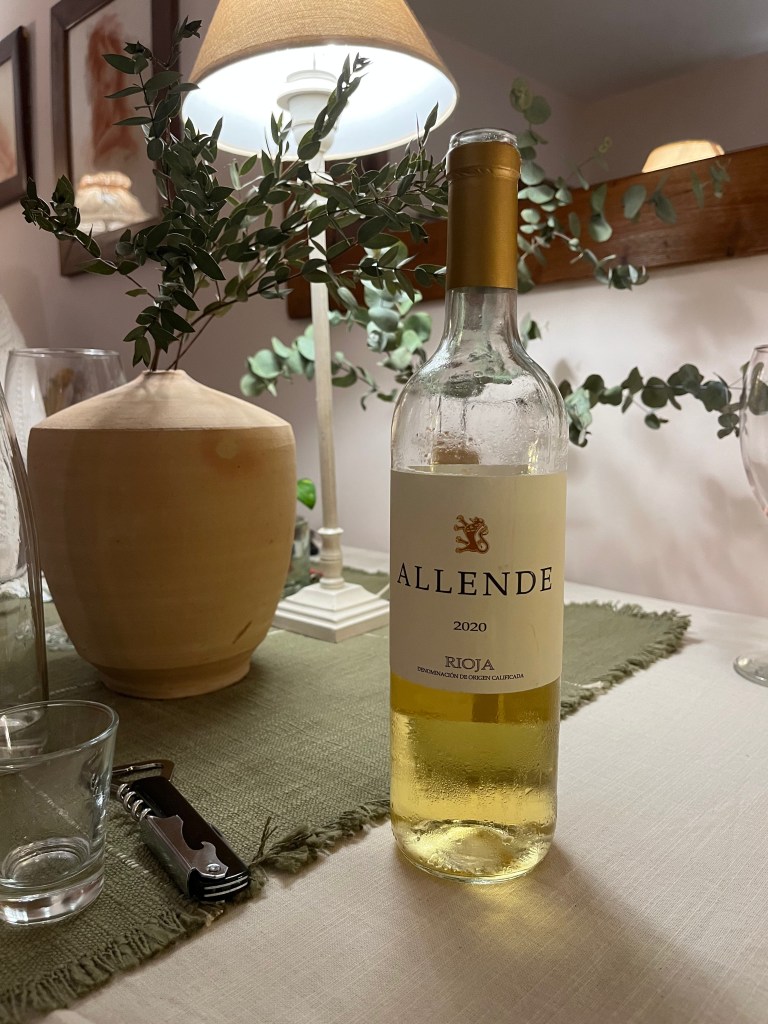
Among the world of Spanish white wines I’ve enjoyed exploring, the Allende Rioja Blanco stands out as a particularly remarkable find. I first tried this in Barcelona during dinner with some friends. It paired wonderfully with both Mexican food as well as with Spanish heavy and light dishes. What struck me immediately was its surprising body for a white wine – it’s genuinely hard to find white Riojas that are this well-balanced and unique.
My French friend commented during our dinner that it reminds her of a particular type of coveted white wine in France which they call “vieilles vignes,” usually meaning a common description on wine labels indicating that a wine is the product of grape vines that are notably old. This designation typically results in a particular taste profile in white wine that is hard to find at this price range. Considering that it’s not from France but does produce that desired quality and is available in the US, this is quite a find!
The Allende Rioja Blanco might be somewhat overshadowed by other whites produced in the region, but it shouldn’t be dismissed. It represents a phenomenal modern version of the classical whites from Rioja with complexity, volume, and aging potential.
Rioja Blanco wines have a rich history dating back centuries, though they’ve often been overshadowed by their red counterparts. Traditionally made primarily from Viura (also known as Macabeo), modern white Riojas like Allende often incorporate other varieties such as Malvasia and Garnacha Blanca to add complexity. While red Rioja gained international fame earlier, white Rioja has been experiencing a renaissance in recent decades as winemakers like Miguel Ángel de Gregorio at Finca Allende have been pushing the boundaries of what these wines can achieve.
Making:
Finca Allende was founded in 1986 by Miguel Ángel de Gregorio, who has become one of Rioja’s most respected winemakers. The estate is located in the town of Briones in Rioja Alta, where Miguel Ángel is fighting to bring back the idea of terroir to local winemaking.
For the Allende Blanco, the grapes are sourced from vineyards in Rioja Alta, where the combination of Atlantic and Mediterranean climate influences creates ideal conditions for white wine grapes. The soil composition in this area – primarily clay and limestone – contributes significantly to the wine’s mineral character and structure.
The winemaking process for Allende Blanco involves hand-harvesting the grapes, followed by gentle pressing and fermentation. What distinguishes this wine is its oak treatment – the 2020 vintage spent 15 months in French oak barrels before bottling in April 2022. This extended barrel aging is unusual for white wines and contributes significantly to its complexity and aging potential. In case you don’t read Spanish, the label details that the Allende blanco is not subjected to stabilizing treatments or aggressive filtering.
Tasting:
This wine consistently delivers well above its price point, showcasing the potential of Rioja whites when crafted with attention to tradition while embracing modern techniques. Let’s examine its characteristics:
Eye: In the glass, the Allende Blanco presents a brilliant straw-gold color with hints of green reflections. It has remarkable clarity and a viscosity that suggests its substantial body – something you don’t often see in white wines.
Nose: The aromatic profile is immediately complex and engaging. Initial notes of ripe yellow apple and pear give way to more intricate aromas of citrus peel and a distinctive minerality. To me, there’s also an intriguing hint of fennel and fresh herbs that you get as the wine opens up.
Mouth: The first sip confirms what the nose suggests – this is a white wine of remarkable substance and complexity. It’s medium to full-bodied with a creamy texture that coats the palate without being heavy. The flavor profile reveals layers of ripe orchard fruits, particularly yellow apple and pear, complemented by citrus notes, subtle vanilla, and a distinct mineral backbone. What’s most impressive is how the oak influence is perfectly integrated, adding structure and complexity without overwhelming the fruit. The finish is impressively long and persistent, with a pleasant interplay between fruit, spice, and refreshing acidity.
Pairing:
The surprising versatility of this wine has become evident through several meals, where it pairs beautifully with both Mexican and Spanish cuisines. It works wonderfully with paella, roasted chicken with herbs, and we even tried it last with chilaquiles, and once with tuna ceviche. The wine’s acidity cuts through fatty foods while its complexity complements more nuanced and bright flavors.
Here’s a detail sheet:
Producer: Finca Allende
Region: Rioja Alta, Spain
Grape Varieties: Primarily Viura (Macabeo) with some Malvasia
Alcohol Content: 13.6%
Aging: 15 months in French oak barrels
Serving Temperature: 12-14°C (54-57°F)
Average Price: $25-30 USD
Production: 36,000 bottles of the 2020 vintage
Certification: DOCa Rioja
Critics’ Score: 93 points from The Wine Advocate (Luis Gutiérrez, Feb 2024)

Here’s where to buy:
In the United States, this wine is available through select wine shops and online retailers such as Binny’s Beverage Depot, Wine.com, and specialty Spanish wine importers. It typically retails between $25-30.
In Spain, it’s widely available at specialized wine shops (vinotecas), higher-end supermarkets, and directly from the winery’s online store. Prices typically range from €18-25.
In other European countries, availability varies, but it can be found through Spanish wine specialists and online retailers, particularly in the UK, Germany, and the Netherlands.
¡Salud!
 lesbegudes.com
Leave a comment