
A short guide to the quintessential aperitif
Vermouth is a type of fortified wine, which means it’s a wine that has had additional alcohol, often a grape spirit, added to it. It’s also an aromatized wine, since it’s also infused with a blend of herbs and spices, for which there is no one true recipe, but must feature the distinctive bitterness of wormwood. This latter herb is also where the name comes from.
The result is an aromatic elixir that we drink alone in places like Catalonia, but which in most places on Earth is essential to classic cocktails like the Martini. Vermouth has many variations, mainly in the Mediterranean regions of Spain, Italy, and France. It’s mostly available in red, white, and dry variations, many of which are the basic ingredients for other seminal cocktails like the Negroni, the Manhattan, and the Americano.

In Catalonia, where I’ve decided to live the last few years, it’s long been the go-to drink for many social rituals across generations. From Tarragona to Cadaqués, it’s typical to meet with friends before lunch on weekends to “fer un vermut”, which is Catalan for “make a vermouth”. Of course, you don’t actually make anything, you just go to a place that serves it (most bars do) and order one, typically accompanied by olives or other snacks, and garnished with a slice of orange for the red variation, lemon for the white.
In recent years, vermouth has slowly found its way back into the menus of bars and restaurants beyond the Western Mediterranean coasts, and it’s now not as surprising to order one in other parts of the continent, and even America.
The Origin of Vermouth
As I hinted above, the term “vermouth” finds its roots in the German word “wermut,” meaning wormwood. This aromatic herb, scientifically known as Artemisia absinthium, imparts the bitter flavor that characterizes the fortified wine. In fact, the presence of wormwood is essential in the recipe for any concoction to rightfully bear the title of vermouth. This herb is also used as the main ingredient in absinthe.
While civilizations from the 1250 BC Chinese to the ancient Greeks were known to indulge in wines infused with herbs (usually for ‘medicinal’ purposes), it was the Italian Antonio Benedetto Carpano who, in 1786, invented the concept of vermouth as we recognize it today. Working as a shop assistant in a liquor store in Turin, Carpano sought to create a beverage suitable for the refined tastes of the ladies of his era, who would typically find red wine too strong. So, Carpano added an infusion of herbs to white wine. The Carpano brand still produces several varieties of vermouth to this day, out of their distillery in Milan.

Up to that point, most fortified wines and liqueurs containing wormwood that were produced in Europe were consumed for medicinal reasons; at least as medicine was understood in those days. Beyond alleged health benefits, it was Carpano’s sweeter version which gave way to the habit of drinking it as an aperitif, purely for enjoyment. This soon became a trend in Italy and France throughout the 18th century and made its way into sunny old Spain. For proximity and cultural reasons, Catalonia was perhaps the most fertile ground for the elixir to persuade more palates.
As both the medicinal and the aperitif use case gained traction, brands started to emerge, each proposing a distinct concoction of wine fortified with a distillate and aromatized with wormwood and a unique blend of other herbs and spices. Today’s brands employ 40 to 50 botanicals, and will always keep their recipe a secret. For some interesting non-Catalan varieties that we’ll cover some other time, see Martini & Rossi, Cinzano, and Noilly Prat.
The Art of Crafting Vermouth
Actually making the drink is an intricate process that hinges on the extraction of flavors from a curated selection of herbs and botanicals. These components are crushed, then macerated or infused in a hydroalcoholic solution. After an appropriate duration, ranging from days to weeks depending on the herb, the resulting extracts are filtered and blended with the chosen wine. The mixture is then allowed to rest, filtered once more, chilled, and finally bottled.
According to the Carpano brand’s website, vermouth must be at least 75% wine, and have an alcoholic strength between 14.5% and 22% ABV, aside from containing wormwood. This, of course, goes for all varieties.

Types of Vermouth: Red, White, and Dry, not all of Them Sweet
Contrary to popular belief, the distinction between red and white vermouth does not arise from the color of the base wine. Traditionally, both types are crafted using white wine. The variance in hue is attributed to the specific blend of herbs, spices, and the addition of caramel to sweeten and deepen the color of red or black vermouth.
This is why the red and white styles of vermouth are grouped up as “sweet vermouth”, especially in cultures where this drink is rarely enjoyed by itself. Red and white vermouths are typically made in Italy, where they call it rosso, and in Spain, where they typically call it negre, which is Catalan for black. In these geographies, these types of vermouth tend to dominate the market. These varieties tend to be thicker in flavor and contain sweeter notes like fruits and vanilla. They typically have a higher sugar content and the particularity of sometimes featuring coriander as one of the critical ingredients.
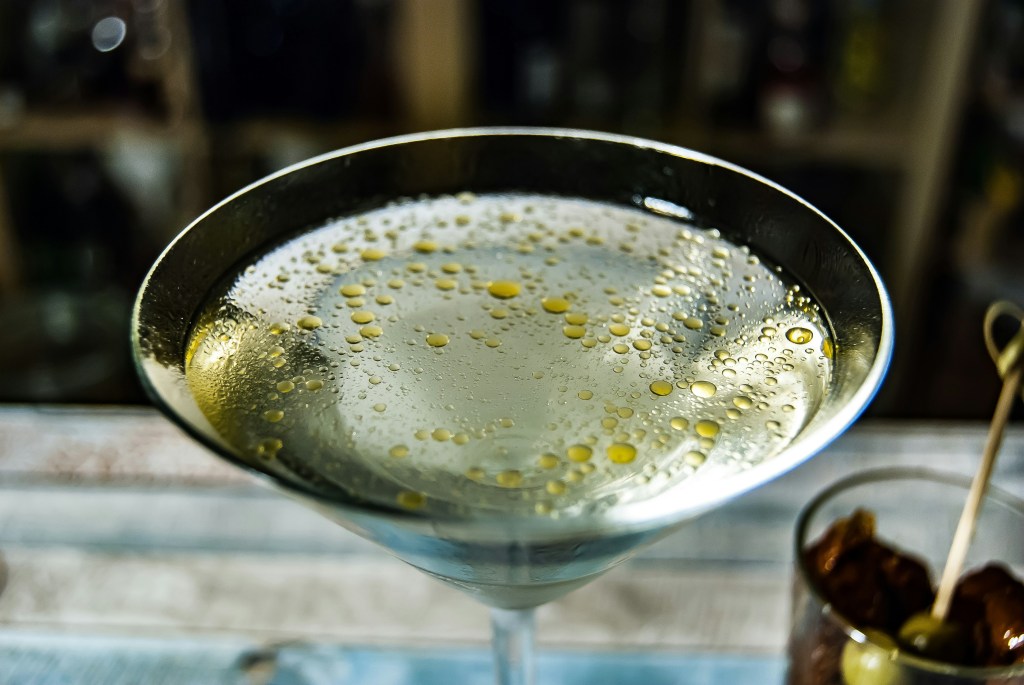
The variant known as dry or extra dry vermouth is also quite prominent, especially in cocktails and mixed drinks like the martini. Ever wondered why a martini can be “dry” or “extra dry”? Now you know why. Originating in France, dry vermouth boasts heightened bitterness and reduced sweetness compared to its counterparts. This helps explain why it’s mostly used in combination with other spirits and rarely enjoyed on its own.
In recent years, rosé and orange vermouths have also emerged, though they remain less prevalent. Notably, non-alcoholic variations have also made their debut recently, and they’re available in both the French and Italian types.
When do you drink vermouth?
The short answer is, whenever you want. But, in sunny old Spain, the consumption of vermouth is steeped in tradition and often accompanies the cherished act of the aperitif. In other words, you drink it before lunch. Living in Barcelona, I’ve seen people having it at night as well, but it’s not that typical. A Catalonian girl once scolded me for ordering one at 7 pm, but let’s say she was a bit of a purist. Provided that you’re okay with potentially raising some eyebrows, you can order it whenever you like.
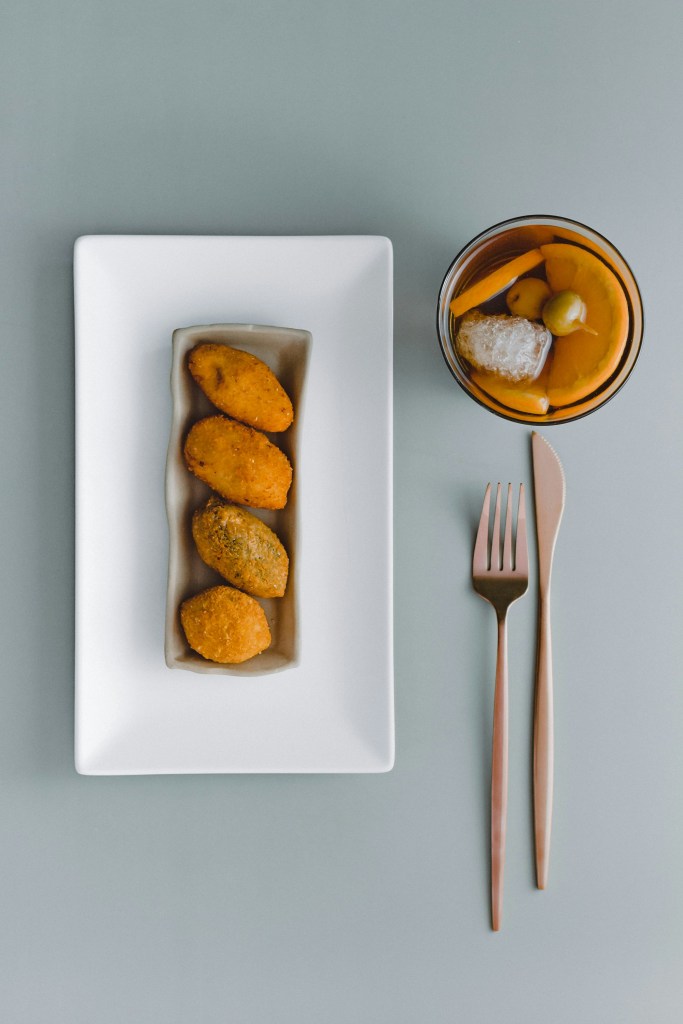
Furthermore, enjoying vermouth entails a few simple yet essential steps. Aside from the way to serve it, people usually accompany it with snacks like olives, chips, and maybe canned mussels or some other quick delicacy. Many people also like to add a bit of club soda to the glass, to either offer an effervescent touch, lighten the alcoholic quality, or just freshen it up after a few sips. In Spain, the act of drinking vermouth transcends a mere libation; it symbolizes a cherished social ritual.
Peculiarities of French and Italian vermouths
While this article has tried to cover all of the main varieties of vermouth, I must admit a certain bias towards Spain when describing flavors and drinking habits. Hence, here are a few things worth mentioning about the other two main vermouth-producing nations. After all, Spain is actually no.3 behind France (no.2) and Italy; the main vermouth exporter of the globe.
In France, vermouth production often emphasizes a drier profile, with a pronounced bitterness that has been pivotal in cocktails like the Obituary and the dry martini. French vermouths are renowned for their herbal complexity, often featuring botanicals like chamomile, lavender, and gentian root, which contribute to their signature character.
On the other hand, Italian vermouths tend to embrace a more aromatic and slightly sweeter profile, reflecting the Italian preference for bold flavors and rich culinary heritage. Italian vermouths are characterized by their use of regional herbs and spices, such as citrus peel, cloves, and cinnamon.
How to buy vermouth, picking the right bottle
When it comes to purchasing a bottle of vermouth, navigating the vast array of options can feel daunting. If you’re a curious newcomer, there are a few key factors to consider when shopping for vermouth.
First and foremost, it’s essential to determine your preferred style of vermouth— whether you lean towards the bold and herbaceous profile of Italian varieties, the dry and acidic character of French counterparts, or the fresh and playful experience brought on by the Spanish versions. Understanding your flavor preferences will narrow down the options and simplify your decision-making process.
Obviously, the next hing to consider is the intended use. Are you planning to sip it neat as a pre-dinner aperitif, or do you envision incorporating it into cocktails you already like? If you’re making classics like a martini or negroni, the style is cut out for you— you just need to pick a brand. On this latter point, hopefully I’ve provided a couple of recommendations, but if still undecided, I always recommend just doing a bit of research on the company, the taste profile, and picking one. If all goes well, it won’t be the last bottle you ever buy.

So, when perusing the shelves, pay attention to the label for clues about the vermouth’s flavor profile and botanical composition. Look for descriptors like “herbal,” “citrusy,” or “spicy,” which can provide insight into the overall taste experience.
Additionally, at least at first, seek out reputable vermouth brands with a history of quality craftsmanship, such as Campari, Martini & Rossi, Dolin, and, of course, Carpano. If you go with the latter, you can get close to the seminal iteration of Vermouth that they had in the 18th century. I recommend the Carpano Antica for the classic idea, or the Punt e Mes for a more modern iteration. These big brands are likely the safe bets to start with, and you can get more niche as your exploration evolves along with your palate.
And if close to Catalonia, the main producers are based either in Reus (Miró), Tarragona (Yzaguirre), or Barcelona (Casa Mariol). Like with Ratafia, a Catalan liquor, each region and often some bars or households will proudly display their iteration. If actually in Catalonia or Valencia, the best bet before buying a bottle is just ordering one at a bar. Some places will even make their own and serve it from a little barrel.
By all means, don’t be afraid to experiment and try new offerings from smaller producers or artisanal distilleries. Vermouth is a versatile and extremely rich concept of drink; with a wide history to draw from when trying out new ways of, well, getting a buzz on.

 lesbegudes.com
Leave a comment